| Years | Image | Event | Description | Keywords |
| 1524 | | Verrazano explores NE coast | | exploration, settlement, Indians |
| 1614 | | John Smith maps New England | | exploration, map, Indians |
| 1614 | | Dutch explore the Connecticut River | | exploration, settlement, Connecticut |
| 1624 | | Pemaquid (Maine) established | This is a conjectural date since the exact time is unknown. This was one of several fishing or fur-trading operations established in the 1620s in northern new England. | settlement, colony, Maine |
| 1634 | | Massachusetts immigrants settle Wethersfield and Windsor, Connecticut | | Connecticut, colony, settlement |
| 1634 | | John Endecott defaces King's colors | Radical Puritan John Endecott of Salem believed that the image of the cross was idolatrous. A website for the Popham Colony has a representation of such a flag. | Endicott, Endecott, flag, Hawthorne, Puritans |
| 1642 | | English Civil War begins | | |
| 1646 | | Massachusetts begins to establish "praying towns" | | Indian |
| 1647 | | Alice Young hung in Hartford | May be the first NE execution for witchchraft | witch, Hartford |
| 1648 | | Massachusetts executes Margaret Jones | This is the first known Massachusetts execution for witchcraft. John Winthrop described her "malignant touch." | witch |
| 1649 | | Charles I executed | | |
| 1654 | | Harvard establishes Indian College | | Indian, Harvard |
| 1656 | | First Quaker missionaries arrive in New England | Between 1656-1661, at least 40 Quakers preached in Massachusetts. Some came from England, others from Barbados or Rhode Island | Quaker, Whittier |
| 1660 - 1725 | | A succession of conflicts transforms indigenous/ colonial relations. | A map from the 1704 Deerfield website shows the colonial Northeast, c, 1660-1725. | Indian war |
| 1662 | | Beginning of Hartford witch outbreak. | During 1662-63, accusations against 13 persons resulted in 4 executions. | witch, Hartford |
| Return to Top |
| 1671 | | Katherine Naylor, the wife of a Boston merchant, sues for divorce. | Her story came to light in the early 1990s as a consequence of excavations associated with Boston's Big Dig. | |
| 1675 | | King Philip's War | Read a modernized version of Philip's account of Indian grievances originally contained in a narrative by the Rhode Island Quaker, John Easton | Indians, Philip |
| 1704 | | Deerfield Massacre | A winter raid resulted in the deaths or captivities of three-fifths of the town's inhabitants. The attacking force included men from Odanak and Schaghiticoke, where many New England refugees had gathered after King Philip's War. | Indians, French, frontier, captivity" Philip |
| 1745 | | Pigwackets in exile in Massachusetts | Caught between English and French forces, the Pigwackets spent King George's War as refugees in Massachusetts | Indians |
| 1764 | | Thomas Hutchinson, "History of the Colony and Province of Massachusetts Bay" | An important early history by the later Loyalist governor. Dealt with witchhunting and with the banishment of his ancestor, Anne Hutchinson. | witch, antinomianism, loyalist |
| 1774 | | First Continental Congress | | revolution |
| 1774 | | John Malcolm tarred and feathered | An example of pre-revolutionary violence and a key episode in the biography of George Robert Twelves Hewes. | revolution |
| 1774 | | Intolerable Acts | | revolution |
| 1774 | | In December, Paul Revere rides to Portsmouth, New Hampshire | | powder revolution |
| 1783 | | Boston establishes annual July 4 oration | After the revolution, Independence Day replaced Pope's Day and Boston Massacre orations in public memorials. | |
| 1791 | | Vermont joins the union as the 14th state | | |
| 1800 | | With 1,400,000 people N.E. contains 28 percent of the U.S. population | | |
| 1804 | | Lewis and Clark Expedition begins | | |
| 1814 | | Washington Irving, "Philip of Pokanoket" | An early, sympthetic account of King Philip | Indian, Philip |
| 1814 | | Hartford Convention considers secession | | Connecticut, Federalists, revolution |
| Return to Top |
| 1818 | | John Trumbull's painting of the signing of the Declaration of Independence displayed at Faneuil Hall | | July 4, revolution |
| 1824 | | Lydia Sigourney, "Sketches of Connecticut Forty Years Since" | | |
| 1824 | | Pilgrim Hall museum opened in Plymouth | | |
| 1824 | | A Narrative of the Life of Mrs. Mary Jemison published | | Indian |
| 1824 | | Lydia Maria Child, "Hobomok: A Tale of Early Times" | A distraught Puritan woman marries an Indian. | Indians |
| 1824 | | Lafayette feted in America | | revolution |
| 1824 | | Bunker Hill monument begun | | revolution |
| 1828 | | Female textile workers strike at Dover, N.H. | See documents on the course Web site related to Dover strikes. | women's work |
| 1830 | | New Hampshire legislature encourages sericulture | In the 1820s and 1830s several states offered bounties. In most places the "silk craze" had collapsed by 1840. | women's work |
| 1834 | | Whittier publishes "The Slave Ship" | | slavery, abolition, maritime |
| 1834 | | Textile strikes at Lowell, Massachusetts and Dover, N.H. | In this and the 1836 strike at Lowell, workers compared themselves to slaves. | women's work |
| 1834 | | James Hawkes, A Retrospect of the Boston Tea-Party, with a Memoir of George R.T. hewes" | | revolution |
| 1834 | | Shoebinders of Lynn, Massachusetts form a society "for the protection and promotion of Female Industry" | Its leaders helped to form the Female Anti-Slavery Society in 1837. | women's work |
| 1834 | | Burning of Ursuline convent in Charlestown | | immigration, Catholicism |
| 1835 | | George Robert Twelves Hewes feted in Providence and Boston | Joseph G. Cole painted his portrait, called "The Centenarian" | Independence Day, July 4, revolution |
| Return to Top |
| 1836 | | Henry Wadsworth Longfellow begins teaching modern languages at Harvard. | He lasted until 1854, though he complained early on, "Perhaps the worst thing in a college life is this having your mind constantly a playmate for boys,--constantly adapting to them, instead of stretching out and grappling with men's minds."
Today Harvard's Longfellow Institute honors American multi-lingualism. | |
| 1837 | | John Sibley publishes story of Washington Elm | | revolution |
| 1840 | | Agitation for Ten-hour Day | | labor |
| 1841 | | Catharine Williams, "The Neutral French, or the Exiles of Nova Scotia" | | |
| 1841 | | Henry Wadsworth Longfellow, "The Skeleton in Armor" | | bones, Indians |
| 1841 | | Catharine Beecher, "A Treatise on Domestic Economy" | | women's work |
| 1841 | | Longfellow, "The Wreck of the Hesperus," in Ballads and Other Poems | | maritime |
| 1841 | | Amistad case argued before the Supreme Court | | John Quincy Adams slavery |
| 1842 | | Henry Wadsworth Longfellow, Poems on Slavery | | slavery, abolition |
| 1842 | | Dorr Rebellion in Rhode Island | | |
| 1842 | 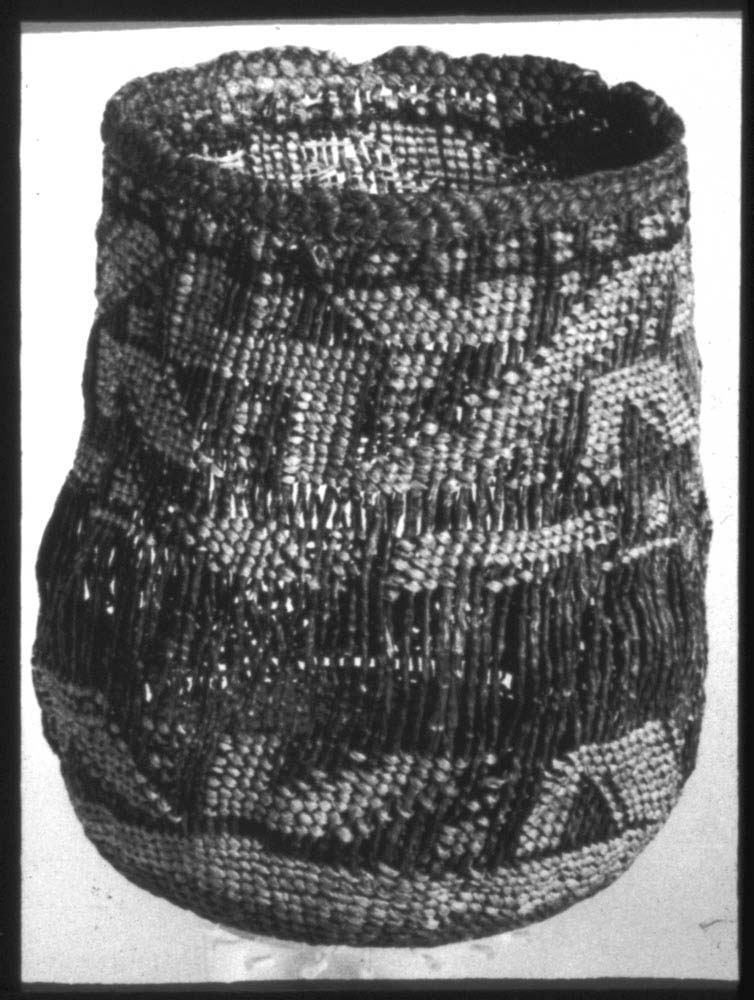 | Eleanor Field gives the Rhode Island Historical Society a basket purportedly made during King Philip's War. | | |
| 1842 | | With the encouragement of his friend Charles Sumner, Longfellow publishes "Poems on Slavery | | |
| 1842 | | Wadsworth Atheneum opens in Hartford | Considered the nation's first public art museum. | Connecticut, museum |
| 1845 | | New England Historic Genealogical Society Founded | | |
| 1845 | | Frederick Douglas publishes his narrative. | He became a powerful voice in both the anti-slavery and women's rights movements. | slavery, abolition |
| Return to Top |
| 1845 | | Beginning of Irish famine | | immigration |
| 1846 | | Mexican War begins | | |
| 1846 | | Hawthorne, "Roger Malvyn's Burial" in Mosses From An Old Manse | Hawthorne's story built on an already existing romance about Lovewell's Defeat at Pigwacket in 1725. | Lovewell, Maine, bones |
| 1847 | | Sarah Hale, ed. of Godey's begins Thanksgiving campaign | For samples of Hale's Thanksgiving editorials, go to "The Godey's Lady's Book" link at the University of Vermont. | |
| 1847 | | John Greenleaf Whittier, "Supernaturalism of New England" | | witch, folklore |
| 1847 | | Henry Wadsworth Longfellow, "Evangeline" | | |
| 1847 | | First edition of Frederick Douglass's North Star | | |
| 1848 | | William Oakes, Scenery of the White Mountains | Oakes said that from one angle the profile resembled a "toothless old woman in a mob cap." From the best angle, however, it showed a man with character "fixed and firm." | old man, profile |
| 1848 | | Elizabeth Ellet. Women of the American Revolution | | |
| 1848 | | Thompkins Matteson's "Examination of a Witch" exhibited in New York | | witch, painting |
| 1848 | | James Russell Lowell, "The Courtin'" | | |
| 1848 | | Seneca Falls Women's Rights Convention | | |
| 1849 | | California Gold Rush | | economy |
| 1850 | | 45 out of 100 New Englanders live in Maine, NH, or Vermont | | population distribution |
| 1850 | | Nathaniel Hawthorne, "The Great Stone Face" | | old man, profile" mountain |
| Return to Top |
| 1854 | | Lucy Larcom, "Hannah Binding Shoes" | | women's work, maritime |
| 1854 | | Anthony Burns arrested under the Fugitive Slave Act | | slavery |
| 1861 | | Oliver Wendell Holmes, "Under the Washington Elm" | | revolution |
| 1864 | | U.S. Sanitary Commission sponsors "Colonial Kitchens" | | |
| 1864 | | Massachusetts Historical Society published Phillis Wheatley letters | | |
| 1866 | | John Greenleaf Whittier, "Snowbound" | | poetry |
| 1868 | | Winslow Homer illustrates life in Lowell Mills | See "Morning Bell" and "Bell Time" in Selected Slides: Homer. Also see HarpWeek (Hollis e-resources) issues of July 25, 1868 (p. 472) and December 23, 1873 (p. 1116). | women's work |
| 1873 | | Anne Whitney wins competition to create a sculpture of Samuel Adams for the United States Capitol. | Later the City of Boston installed a bronze version at Faneuil Hall even though in 1874 a Boston commission rejected her sculpture of Charles Sumner because she was a woman.
| statue |
| 1875 | | Custer defeated at the Battle of Little Bighorn | | Indians |
| 1880 | | Memorial Hall dedicated in Deerfield | A battered door from the so-called "Indian house" was a prominent feature. | Deerfield, museum, Indian |
| 1888 | | Whittier supports women's suffrage. | | suffrage, Quaker |
| 1894 | | Immigration Restriction League Founded at Harvard | | labor, population |
| 1904 | | Wallace Nutting launches a career as a historical entrepreneur | Wallace Nutting (1861-1941) attempted to record 'that old life in America, which is rapidly passing away.' | |
| 1904 | | Henry James visits the supposed House of the Seven Gables. | James wrote, "Hawthorne's ladder at Salem, in fine, has now quite gone, and we but tread the air if we attempt to set our critical feet on its steps and its rounds. | |
| 1905 | 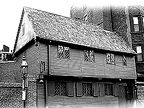 | Paul Revere House saved from demolition | The house, which was in an immigrant neighborhood, was reinvented as an early colonial dwelling. It is still open to the public. | museum |
| Return to Top |
| 1924 | | American Indians granted citizenship and the right to vote | | |
| 1924 | | Ku Klux Klan has 50,000 members in Maine | | |
| 1924 | | Congress passes restrictive immigration laws | | population |
| 1924 | | First of New England textile mills moves south | | labor, economy |
| 1940 | | Civil leaders of Portuguese descent gather before a mural of the Pilgrim fathers. | | immigration |
| 1940 | | World war II fuels new industries in New England | | economy |
| 1942 | | Farmer's Museum in Cooperstown, New York established | | |
| 1942 | | Touro Synagogue designated a National Historic Site | . . . the Georgian influenced building is situated on an angle within the property allowing worshippers standing in prayer before the Holy Ark to face east toward Jerusalem. | |
| 1947 | | Old Sturbridge Village created | | museum |
| 1947 | | Plimoth Plantation founded | | museum |
| 1947 | | Shelburne Museum established | | |
| 1954 | | Brown v. Board of Education overturns "separate but equal" | | |
| 1964 | | Civil Rights Act targets race and sex | | |
| 1972 | | Harvard dedicates the so-called "Bradstreet Gate" between the Science Center and the Yard. | The Bradstreet Gate was controversial because it appeared to by-pass the history of Radcliffe. The passage from Bradstreet's writing engraved on the gate was taken out of context. In the original it described her dismay at the raw condition of the settlement in Boston when she first arrived. Perhaps the first female freshmen in the Yard had similiar anxieties.
Additional Information | |
| 1974 | | Judge Garrity orders school busing in Boston | | |
| Return to Top |
| 2004 | | Memorial Hall Museum launches new website on "The Many Stories of 1704 | | |